Why USDC reshapes remittance infrastructure
Traditional cross-border payment rails are built for an era of physical letters and manual verification. Today, they struggle with opaque fees, multi-day settlement delays, and limited accessibility for the unbanked. USDC addresses these structural inefficiencies by leveraging blockchain infrastructure to offer near-instant settlement and significantly lower transaction costs. This shift isn't just about speed; it's about creating a transparent, auditable, and compliant financial layer that rivals the reliability of traditional banking while offering superior efficiency.
The cost advantage of USDC is particularly pronounced in high-volume corridors. Traditional wire transfers often incur fixed fees ranging from $15 to $30, plus unfavorable foreign exchange spreads. In contrast, USDC transfers typically cost less than 1% of the transaction value. For example, platforms leveraging Circle's infrastructure, such as BCRemit, have demonstrated the ability to make remittances faster and more accessible by bypassing intermediary banks. This cost reduction is critical for migrant workers sending money home, where every percentage point saved directly impacts the recipient's purchasing power.
Settlement speed is another defining differentiator. While SWIFT transfers can take one to five business days to clear, USDC transactions settle in minutes, 24/7. This immediacy reduces counterparty risk and improves cash flow for businesses and individuals alike. The transparency of the blockchain ledger also provides real-time tracking, a feature largely absent in traditional banking systems where funds can disappear into "pending" status for days.
However, the transition to USDC infrastructure requires careful attention to compliance and risk management. As a regulated stablecoin, USDC offers the price stability of the US dollar with the technical efficiency of crypto. This makes it a viable alternative for remittances, provided that the underlying platforms adhere to strict anti-money laundering (AML) and know-your-customer (KYC) standards. The market is moving toward this hybrid model, where the regulatory clarity of fiat meets the operational speed of blockchain.
| Feature | Traditional Wire | USDC Remittance |
|---|---|---|
| Settlement Time | 1-5 Business Days | Minutes |
| Average Cost | $15-$30 + FX Spread | < 1% |
| Transparency | Limited | Real-time Ledger |
| Accessibility | Bank-dependent | Wallet-based |
USDC vs. Traditional Remittance: Cost and Speed Comparison
The primary advantage of using USDC for cross-border transfers lies in the reduction of friction costs. Traditional money transfer services like Western Union and MoneyGram, along with the SWIFT banking network, often charge high fixed fees and percentage-based margins that erode the value of smaller transfers. In contrast, USDC operates on blockchain infrastructure, which significantly lowers the overhead required to move value across borders.
According to data from Mural Pay, USDC remittance models can cut transfer costs by up to 50% compared to traditional methods. This efficiency is particularly noticeable in corridors where traditional providers charge premium rates for speed or accessibility. While traditional services may take one to five business days to settle, USDC transactions typically confirm in minutes, regardless of weekends or holidays.
The table below outlines the key differences in fees, settlement times, and availability between USDC and traditional remittance providers. This comparison highlights the trade-offs between established regulatory oversight and the efficiency of decentralized infrastructure.
| Metric | USDC | Traditional (Western Union/SWIFT) |
|---|---|---|
| Average Fee | 0.1% - 1% (network gas + exchange spread) | 3% - 7% + fixed fees |
| Settlement Time | 1 - 10 minutes | 1 - 5 business days |
| Availability | 24/7 | Weekdays only (varies by provider) |
| Regulatory Oversight | Emerging frameworks (MiCA, US state laws) | Established banking & money transmitter laws |
For investors and developers tracking the stability of the underlying asset, monitoring USDC's performance against major markets is essential. The chart below shows USDC's price stability relative to the US Dollar, confirming its role as a reliable medium for remittance rather than a speculative asset.
When selecting tools for managing these transfers, users often look for hardware wallets or software solutions that support secure key management. Ensuring the security of your private keys is as important as choosing the right transfer method.


As an Amazon Associate, we may earn from qualifying purchases.
While the cost savings are clear, it is important to note that traditional providers offer established customer support and dispute resolution mechanisms that are still evolving in the crypto space. For high-stakes transactions, understanding these regulatory differences is critical for risk management.
Infrastructure models for USDC remittances
Stablecoin remittance infrastructure generally falls into two distinct categories: closed-loop fiat on/off-ramp models and open-loop self-custodial models. Each approach offers different operational tradeoffs regarding compliance burden, speed, and user accessibility.
Closed-loop fiat models
In a closed-loop system, the sender deposits fiat currency, which is converted to USDC by the provider. The provider then moves the stablecoin to a recipient account, converts it back to fiat, and delivers the funds locally. This model mirrors traditional money transfer operators (MTOs) like Western Union but operates on blockchain rails. The primary advantage is familiarity; recipients do not need a cryptocurrency wallet, and senders avoid the volatility and complexity of managing digital assets directly. However, this model requires the provider to maintain robust banking relationships and liquidity pools in multiple jurisdictions to facilitate the on-ramp and off-ramp processes.
Open-loop self-custodial models
Open-loop infrastructure allows users to hold and transfer USDC directly in their own wallets. The sender converts fiat to USDC, sends it to the recipient's wallet address, and the recipient withdraws to fiat through a local exchange or peer. This model eliminates the need for the remittance provider to hold customer funds, significantly reducing custodial risk and regulatory capital requirements. It also enables faster settlement times, often under ten minutes, compared to the days-long delays common in traditional banking. The tradeoff is a higher barrier to entry for users who are unfamiliar with cryptocurrency wallets and private key management.
Operational choices that change the plan
Choosing between these models depends on the target market's financial literacy and regulatory environment. Closed-loop systems are better suited for mass-market adoption where user experience is paramount, while open-loop systems appeal to cost-sensitive users and businesses prioritizing speed and transparency.
| Feature | Closed-Loop | Open-Loop |
|---|---|---|
| User Experience | Familiar, fiat-based | Requires crypto wallet |
| Settlement Speed | 1-3 business days | Minutes |
| Custodial Risk | Provider holds funds | User holds funds |
| Regulatory Burden | High (banking licenses) | Lower (VASP only) |
Regulatory compliance and risk management
Navigating cross-border payments requires more than just speed; it demands a framework that satisfies stringent financial regulations. For remittance providers, the choice of infrastructure directly impacts their ability to operate legally and securely. Using regulated stablecoins like USDC simplifies compliance reporting, offering a transparent ledger that aligns with Anti-Money Laundering (AML) and Know Your Customer (KYC) standards far better than unregulated crypto assets.
The core of this strategy lies in the issuer. Circle operates as a regulated financial institution, providing the necessary audit trails and reserve transparency that institutional partners require. This regulatory clarity reduces legal risk, allowing remittance companies to integrate USDC into their workflows without the shadow of non-compliance. Providers can then focus on optimizing the user experience rather than mitigating existential regulatory threats.
When comparing infrastructure options, the tradeoff between speed and compliance is clear. While decentralized protocols offer anonymity, they often fail AML checks. Regulated issuers bridge this gap, offering the efficiency of blockchain with the accountability of traditional finance. This balance is essential for scaling remittance operations across jurisdictions with varying legal requirements.
Market trends and adoption case studies
USDC adoption in remittances is moving from pilot programs to established infrastructure, particularly in high-volume corridors. The strategy relies on integrating with licensed Money Service Businesses (MSBs) that handle the fiat on-ramps and off-ramps, ensuring compliance with local regulations while leveraging USDC for the cross-border leg.
BCRemit serves as a primary example of this model. By integrating Circle’s USDC, BCRemit has optimized the experience for users sending money internationally, reducing costs and settlement times compared to traditional banking rails. This partnership highlights how stablecoins can act as a neutral bridge currency between disparate fiat systems.
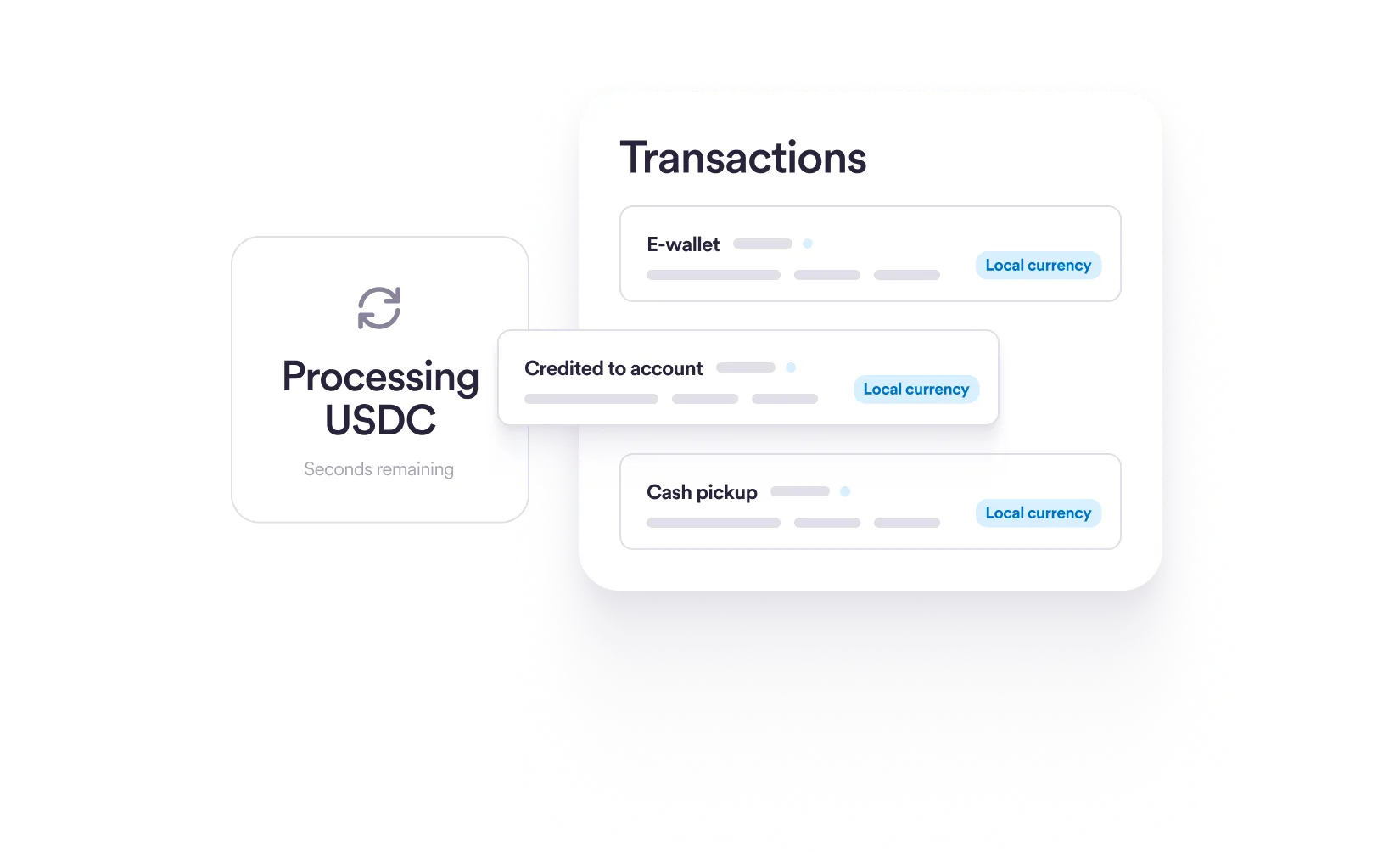
In Africa, Onafriq has partnered with Circle to power cross-border remittances. This collaboration targets the continent’s significant unbanked population and high remittance fees, offering a faster and cheaper alternative to legacy providers. Similarly, emerging markets like Colombia are seeing increased usage as local fintechs adopt USDC to facilitate inbound transfers from the US and Europe, reducing friction for migrant workers sending funds home.
| Partnership | Region | Primary Benefit |
|---|---|---|
| BCRemit | Global | Faster settlement, lower costs |
| Onafriq | Africa | Accessibility for unbanked users |
| Colombian Fintechs | Colombia | Efficient inbound remittances |
These case studies demonstrate that USDC’s value in remittances lies in its regulatory clarity and technical reliability. By partnering with established financial institutions, projects can navigate complex compliance landscapes while delivering tangible savings to end-users.
No comments yet. Be the first to share your thoughts!