Why USDC remittance strategy matters now
The landscape for moving money across borders is shifting beneath your feet. For years, traditional banking rails have been the default for international transfers, but the economics are no longer on your side. Between persistent intermediary fees and slow settlement times, the cost of doing business globally has quietly inflated. Now, a new regulatory layer is being added to that cost burden, forcing financial decision-makers to look for alternatives.
Beginning January 1, 2026, a 1% remittance transfer tax will apply to transfers sent from the United States to foreign recipients when the sender uses cash, money orders, or cashier's checks. This rule, established under the "One Big Beautiful Bill" and detailed in recent IRS proposed regulations, targets physical instruments specifically. While digital bank transfers remain exempt for now, the policy signals a broader government intent to capture revenue from high-volume cross-border flows. It creates a clear inflection point: the window for optimizing remittance infrastructure is closing.
USDC offers a structural advantage in this new environment. Blockchain-based stablecoins bypass the traditional correspondent banking network, eliminating many of the intermediary fees that inflate costs for both sender and receiver. According to case studies from platforms like Mural Pay, USDC remittance models can cut transfer costs by up to 50% in specific corridors, such as Colombia, while delivering funds in minutes rather than days. This isn't just about speed; it's about preserving the principal amount sent.
The strategic imperative is clear. As regulatory costs rise and consumer expectations for instant settlement grow, relying on legacy rails becomes a liability. USDC provides the infrastructure to maintain margin and reliability. The question is no longer whether to adopt stablecoin technology, but how quickly you can integrate it before your competitors do.
Infrastructure models for stablecoin remittances
The architecture you choose dictates your compliance burden, settlement speed, and final cost to the user. As of 2026, the new 1% remittance transfer tax on physical instrument transfers (cash, money orders, cashier's checks) makes the choice of infrastructure a direct financial lever for providers. The two prevailing models are closed-loop and open-loop systems, each serving different segments of the market.
Closed-loop fiat on/off ramps
In a closed-loop model, the sender and recipient both interact with traditional fiat banking rails. The remittance provider acts as a custodian, converting the sender’s fiat into stablecoins (like USDC) internally, moving them across a blockchain, and then converting them back to fiat for the recipient. The user never touches a crypto wallet.
This model offers the lowest barrier to entry for consumers who are unfamiliar with cryptocurrency. However, it requires the provider to maintain robust relationships with traditional banking partners for both the initial deposit and the final payout. While the backend uses crypto for speed, the frontend remains entirely fiat-based, meaning the provider must still navigate traditional AML/KYC checks and banking correspondent fees.
Open-loop crypto-native flows
Open-loop infrastructure requires the sender and recipient to hold digital wallets. The sender converts local currency to USDC and sends it directly to the recipient's wallet address. This model eliminates the need for a final fiat conversion step on the provider's end, as the recipient can spend the stablecoin directly or convert it through a peer-to-peer network.
This approach offers the fastest settlement times and the lowest transaction costs because it bypasses traditional banking rails entirely. However, it demands a higher level of financial literacy from the user. For 2026, this model is gaining traction in markets with high inflation or limited banking access, where the ability to hold a digital dollar directly is more valuable than the convenience of a bank payout.
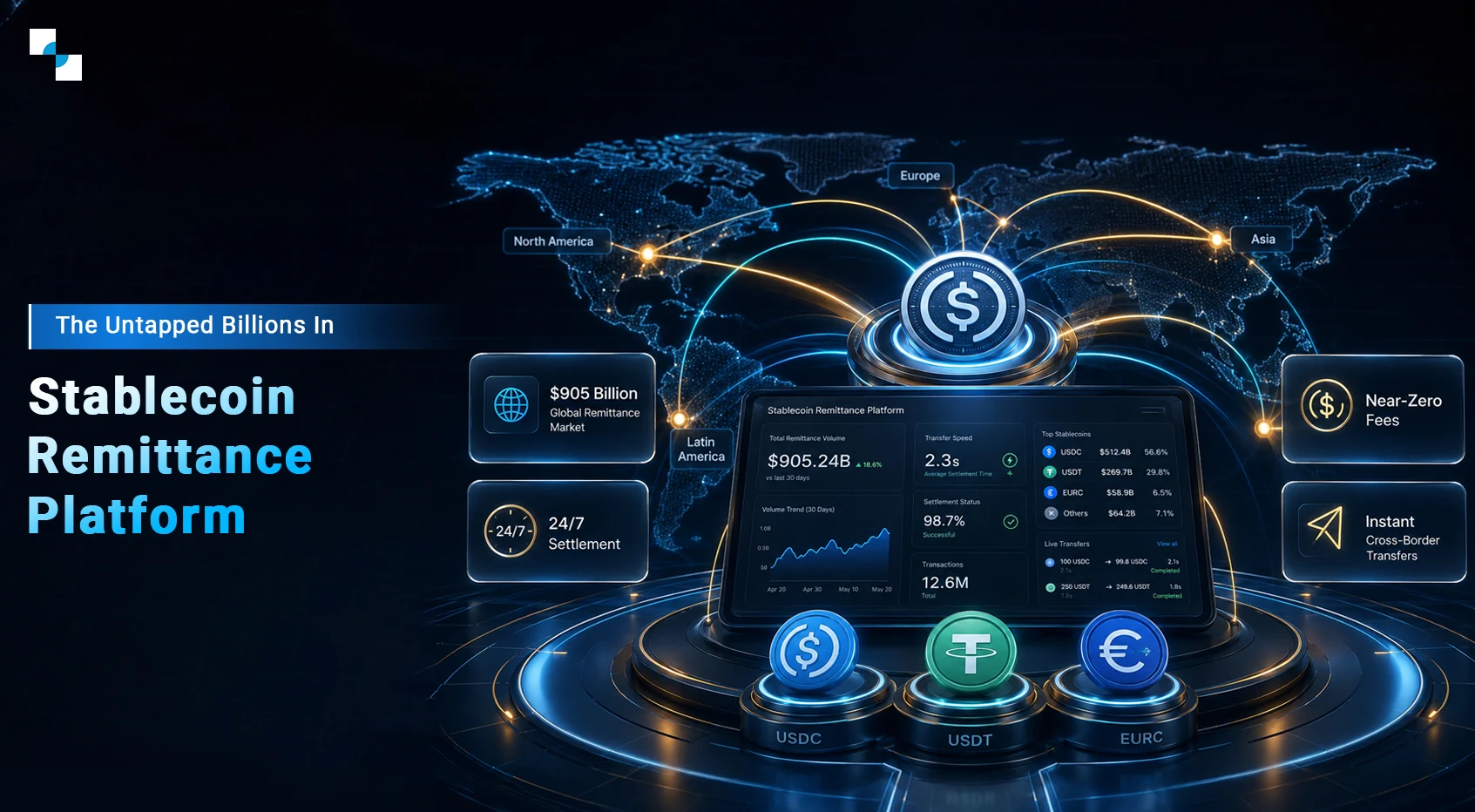
Comparison of Infrastructure Models
| Feature | Closed-Loop (Fiat) | Open-Loop (Crypto-Native) |
|---|---|---|
| User Experience | Familiar; uses bank accounts/cards | Requires digital wallet management |
| Settlement Speed | Fast (hours) | Near-instant (minutes) |
| Compliance Burden | High (traditional banking + crypto) | Moderate (wallet-based AML/KYC) |
| Cost Structure | Higher (bank fees + conversion) | Lower (network gas + minimal spread) |
| 2026 Tax Impact | Subject to new 1% transfer tax on physical instruments | Generally exempt if no physical instrument used |
The 2026 regulatory landscape, particularly the introduction of the remittance transfer tax, heavily favors open-loop models for providers looking to minimize liability and cost. By avoiding physical instruments, open-loop transfers can often sidestep the specific triggers of the new tax, offering a significant competitive advantage in price-sensitive markets.
How USDC Remittance Strategy Cuts Costs and Speeds Up Settlement
The new 2026 remittance transfer tax changes the math for cross-border payments. Beginning January 1, 2026, a 1% tax applies to remittances sent from the United States when the sender uses cash, money orders, or cashier's checks. This rule targets traditional money transfer providers, making legacy rails significantly more expensive for cash-based senders. USDC-based strategies bypass this friction by moving value digitally from the start, avoiding the physical instrument trigger that activates the tax. This regulatory shift is a primary driver for the current migration toward blockchain-based remittance infrastructure.
USDC remittances offer a stark contrast to legacy providers like Western Union or MoneyGram in both cost and speed. Traditional services often charge 5-10% in fees and take 1-3 days to settle, especially for smaller amounts. In contrast, USDC transfers leverage blockchain networks to process transactions in minutes for a fraction of the cost. For example, platforms like BCRemit have demonstrated that integrating Circle's USDC can cut transfer costs by up to 50% while delivering funds almost instantly. This efficiency is not just theoretical; it is a practical reality for users sending money to countries like Colombia or Mexico.
The speed advantage of USDC is particularly valuable for urgent needs. While banks and money transfer operators rely on correspondent banking networks that involve multiple intermediaries and time zones, USDC transactions are settled on-chain. This reduces the risk of delays and errors. The cost savings are equally significant, as blockchain fees are generally lower than the markup charges applied by traditional remittance services. For financial decision-makers, this means better margins for service providers and more money reaching recipients.
The choice between legacy and USDC rails depends on the specific use case. For large, infrequent transfers, the fixed costs of setting up a crypto wallet may take longer to pay off. However, for frequent, smaller remittances, the cumulative savings from lower fees and faster settlements make USDC the superior option. As the 2026 tax regulations take effect, the gap between traditional and digital remittance costs is likely to widen, further incentivizing the adoption of USDC-based strategies.
Regulatory shifts and the 2026 remittance tax
The regulatory landscape is shifting under your feet. Beginning January 1, 2026, a new 1% remittance transfer tax takes effect for transfers sent from the United States to foreign countries. This isn't a vague future scenario; it is a concrete cost increase that changes the math for every dollar you send home.
The Internal Revenue Service and the Treasury Department have clarified that this tax applies specifically when the sender provides cash, a money order, a cashier's check, or other similar physical instrument to the remittance transfer provider. If you are using traditional banks or money transfer operators that rely on these legacy rails, you are now paying a direct levy on your transaction volume.
This creates a stark divergence in strategy. Traditional remittance channels, which often bridge the gap between digital initiation and physical settlement or rely on fiat-heavy infrastructure, face a direct hit to their margins. They will likely pass this cost on to you, or absorb it by widening the spread, making the effective cost of sending money even higher.
USDC-based remittances operate on a different layer. By moving value digitally on-chain, these transactions often bypass the "physical instrument" definition entirely. While the regulatory framework is still solidifying, the structural advantage is clear: you are not handing over cash or checks to an intermediary. You are executing a digital transfer. This isn't just about avoiding a tax; it's about opting out of an outdated system that treats money movement as a physical event.
For financial decision-makers, the choice is no longer just about speed or convenience. It is about regulatory arbitrage. As the 2026 deadline approaches, the cost of using traditional fiat rails is rising in real time. USDC offers a way to keep that capital intact, turning a regulatory burden into a competitive advantage.
USDC Market Data and Performance Trends
USDC has moved from a niche digital dollar to a core infrastructure layer for cross-border value transfer. The asset’s stability and liquidity make it the preferred vehicle for remittance strategies, particularly as the regulatory landscape shifts in 2026.
The technical reality of USDC is its tight peg to the US dollar, providing the predictability traditional fiat rails lack. This stability is critical for senders and receivers who cannot absorb currency volatility. The following chart illustrates USDC’s performance against the US dollar, highlighting the consistent liquidity and low slippage that institutional players rely on.

This market momentum is accelerating due to new regulatory drivers. Starting January 1, 2026, a 1% remittance transfer tax applies to physical instrument-based transfers (cash, money orders) sent from the US. This change, outlined in proposed IRS regulations, creates a clear incentive to migrate high-value remittances to digital, on-chain rails where settlement is faster and costs are lower. USDC’s integration with major payment networks positions it to capture this shifting volume efficiently.
Frequently asked questions about USDC remittances
Helpful gear
Use these product recommendations as a starting point, then choose the size, material, and price point that fit how you actually use the gear.


As an Amazon Associate, we may earn from qualifying purchases.
No comments yet. Be the first to share your thoughts!