Why USDC reshapes remittance infrastructure
Legacy remittance channels often rely on a chain of correspondent banks, each taking a cut and adding days to the settlement time. USDC changes this by acting as a direct bridge between currencies. Instead of routing funds through multiple intermediaries, senders convert local currency into USDC and transfer it instantly to the recipient’s wallet. This infrastructure shift removes the friction of traditional banking hours and cross-border clearing delays, delivering value in minutes rather than days.
The cost advantage is equally significant. By bypassing the layered fees of the SWIFT network and correspondent banking relationships, USDC transactions typically cost a fraction of the average traditional remittance fee. This efficiency doesn't just save money; it increases the actual amount received by the beneficiary, which is critical in markets where remittances support a large portion of household income.
Regulatory clarity further distinguishes USDC from other digital assets. As a dollar-pegged stablecoin issued by a regulated entity, it offers the stability of the US dollar with the speed of blockchain technology. This combination provides a predictable value proposition for both senders and receivers, reducing the volatility risks associated with other crypto assets while maintaining the technological benefits of distributed ledger systems.
USDC rails vs. traditional money transfer
Choosing between USDC and traditional remittance providers comes down to a simple trade-off: speed and cost versus accessibility. While services like Western Union and Wise dominate the legacy market, they often charge high fees and take days to settle. USDC-based infrastructure, such as BCRemit, leverages blockchain rails to offer near-instant settlement with significantly lower transaction costs. This shift is particularly evident in corridors like Colombia, where senders can cut fees by up to 50% compared to traditional methods.
The following table compares the typical metrics for USDC remittance solutions against traditional money transfer operators (MTOs). These figures reflect industry averages and may vary based on specific provider partnerships and market conditions.
| Metric | USDC Solutions | Traditional MTOs |
|---|---|---|
| Settlement Time | 1–5 minutes | 1–3 business days |
| Average Fee | 0.5%–2% | 5%–10% |
| Accessibility | Requires crypto wallet | Cash pickup, bank deposit |
| Transparency | Real-time tracking | Limited visibility |
| Cross-Border Reach | Global, 24/7 | Restricted by banking hours |


As an Amazon Associate, we may earn from qualifying purchases.
While USDC offers superior efficiency, traditional providers still hold an edge in physical accessibility. For recipients without smartphone access or banking infrastructure, cash pickup locations remain essential. However, as mobile adoption grows in emerging markets, the gap is narrowing. USDC solutions are increasingly partnering with local agents to bridge this divide, offering recipients the choice between digital wallets and cash withdrawals.
For senders prioritizing speed and cost, USDC is the clear winner. The ability to send funds instantly with minimal fees makes it ideal for urgent transfers and regular remittances. Traditional providers may still be preferable for those who need to deposit funds directly into a bank account without involving crypto, but even this is changing as fintechs integrate fiat on-ramps directly into their platforms.
Infrastructure upgrades driving 2026 adoption
The shift toward USDC remittances in 2026 isn't just about market sentiment; it's about the underlying plumbing. Circle has spent recent years upgrading the rails that move money, turning stablecoin transfers from a niche crypto experiment into a reliable alternative to traditional banking corridors. These infrastructure upgrades focus on three areas: speed, cost, and compliance.
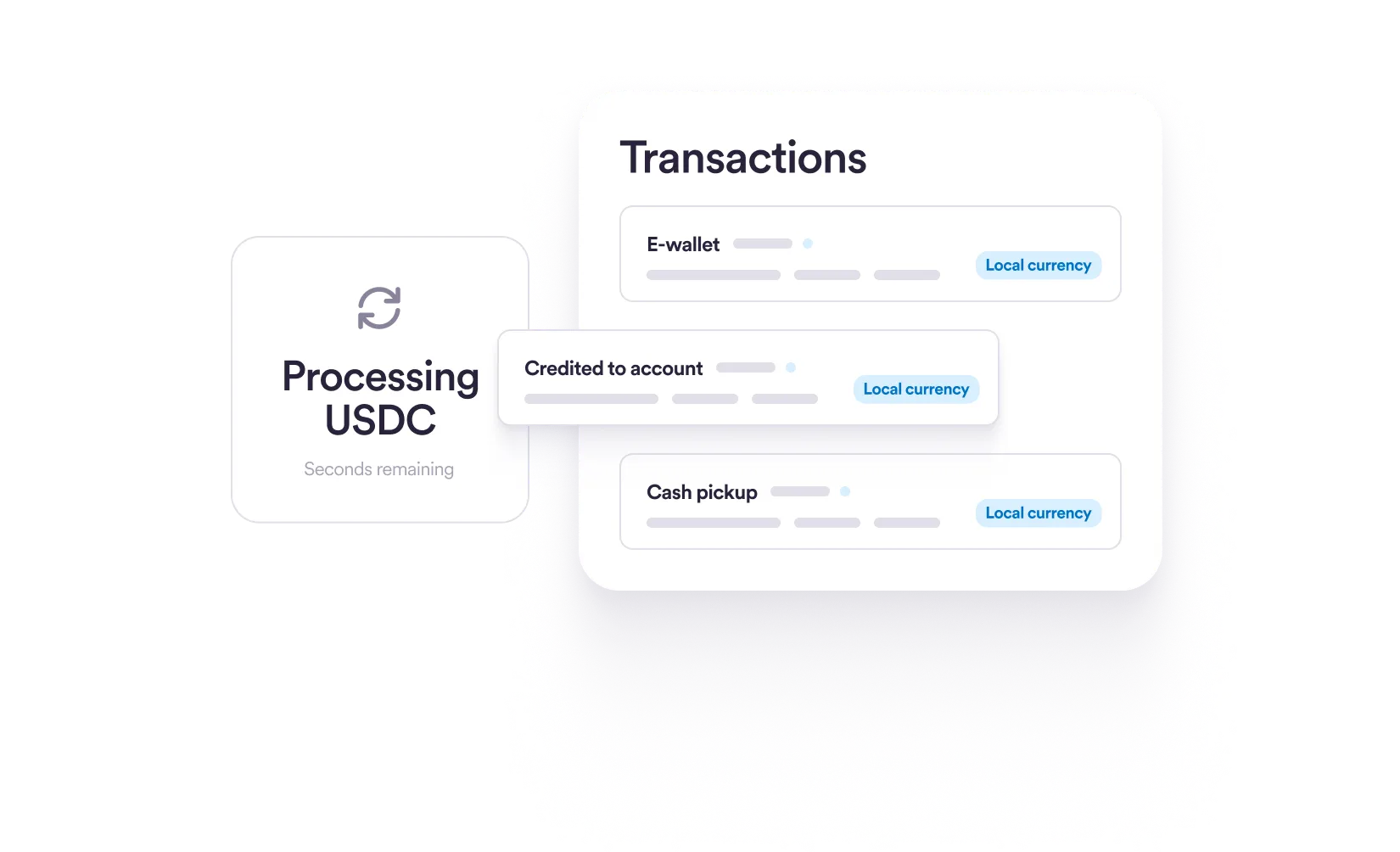
At the core is the Circle Payments Network. This infrastructure allows businesses to move USDC across multiple blockchains without the friction of manual bridging. For remittance providers like BCRemit, this means integrating once and accessing global liquidity instantly. The result is a transaction that settles in seconds rather than days, bypassing the correspondent banking system that traditionally adds layers of fees and delays. By leveraging these native stablecoin rails, providers can offer real-time settlement to recipients in emerging markets, a capability that was previously reserved for premium wire transfers.
Compliance tools have also matured significantly. Early crypto remittances struggled with regulatory uncertainty, but new infrastructure layers now embed compliance directly into the transaction flow. Automated screening and identity verification tools allow providers to meet Anti-Money Laundering (AML) and Know Your Customer (KYC) requirements without slowing down the user experience. This "compliance by design" approach reduces operational risk for providers and builds trust with regulators, making USDC a viable option for institutional players who previously avoided the space.
To see how USDC's market activity supports this infrastructure growth, you can track its performance and volume trends below.
Market analysis of key remittance corridors
The shift toward USDC isn't uniform; it concentrates in specific high-volume corridors where regulatory clarity and cost pressures align. Two regions stand out: Latin America and Sub-Saharan Africa. In both cases, the infrastructure upgrade is driven by the need to bypass traditional banking friction, but the mechanisms differ slightly based on local liquidity and partner networks.
US to Latin America
Latin America remains one of the most active regions for stablecoin remittances. The corridor benefits from high crypto adoption rates and a growing network of regulated local exchanges. USDC serves as the primary bridge currency here, allowing senders in the US to convert to stablecoin, transmit it instantly, and have recipients cash out in local fiat through local partners.
The cost advantage is significant. While traditional wire transfers can take days and charge fees exceeding 6%, USDC-based transfers often complete in minutes with fees under 1%. This efficiency is particularly valuable for migrant workers sending money home frequently. Mastercard’s recent analysis highlights that crypto and fiat currency integrations, including USDC, are becoming standard infrastructure in this region, facilitating faster and cheaper cross-border payments.
US to Africa
In Africa, the focus is often on reducing the friction of correspondent banking. The US-Africa corridor faces higher transaction costs due to the lack of direct banking relationships between many African banks and US institutions. USDC infrastructure, often leveraging partnerships with local fintechs and mobile money providers, bypasses this bottleneck.
Stablecoin remittances to Africa are gaining traction because they offer a reliable store of value in volatile local currencies. By settling in USDC, senders and recipients avoid the double conversion penalty of USD-to-local-fiat-then-back-to-local-fiat. This corridor is seeing rapid growth as more African nations adopt clearer regulatory frameworks for digital assets, making it safer for providers to operate legally and transparently.
Compliance and Regulatory Considerations
USDC remittances operate in a complex regulatory environment where legal compliance is non-negotiable. Unlike traditional banking, stablecoin infrastructure requires strict adherence to Anti-Money Laundering (AML) and Know Your Customer (KYC) protocols at every node. Remittance companies must ensure that funds moving through closed-loop models—where stablecoins act as a bridge between fiat currencies—comply with the financial regulations of both the sending and receiving jurisdictions.
The legal landscape varies significantly by region. In the United States, issuers like Circle are subject to rigorous oversight, but cross-border transfers often involve intermediaries in jurisdictions with less defined digital asset laws. This fragmentation creates jurisdictional risks, including potential freezes on assets or delays in settlement if a transaction triggers a compliance alert in a specific country. Providers must navigate these differences to maintain liquidity and trust.
To mitigate these risks, infrastructure providers are increasingly integrating real-time compliance checks. This means that before a USDC transfer is finalized, the system verifies the sender's identity and screens the transaction against global sanctions lists. While this adds a layer of verification, it is essential for maintaining the legality and stability of the remittance corridor.
No comments yet. Be the first to share your thoughts!