Usdc remittance strategy: infrastructure limits to account for
The primary constraint in any USDC remittance strategy is not the token itself, but the infrastructure required to move it reliably across borders. While USDC offers speed and low cost, the actual user experience depends on the stability of the on-ramp, the liquidity of the off-ramp, and the regulatory clarity of the jurisdictions involved. A strategy that ignores these friction points often fails in practice, even if the technology works in theory.
Consider the case of BCRemit, which leverages Circle’s infrastructure to optimize global remittances. Their approach demonstrates that efficiency comes from integrating USDC directly into existing payment rails rather than treating it as a separate asset class. Similarly, platforms like MuralPay pair virtual USD accounts with near-instant USDC transfers to help SMEs in Colombia access working capital faster while reducing exposure to peso volatility. These examples show that success relies on seamless fiat conversion, not just blockchain settlement.
When evaluating your strategy, focus on three key areas: settlement finality, counterparty risk, and regulatory compliance. Settlement finality ensures that once a transaction is confirmed, it cannot be reversed or frozen. Counterparty risk involves the stability of the exchanges or wallets holding your USDC. Regulatory compliance ensures that your operation remains legal in both the sending and receiving countries. Ignoring any of these can lead to frozen funds or legal action, undermining the entire strategy.
The decision to use USDC for remittances should be based on a clear understanding of these constraints. If your volume is high and your recipients are in jurisdictions with stable crypto regulations, USDC can significantly reduce costs and time. However, if your users are retail consumers in regions with strict crypto laws, the complexity of onboarding and compliance may outweigh the benefits. In such cases, traditional money transfer services or hybrid models might be more appropriate.
Ultimately, a robust USDC remittance strategy requires more than just holding the token. It demands a deep understanding of the infrastructure, the regulatory landscape, and the specific needs of your users. By focusing on these constraints, you can build a system that is not only efficient but also sustainable and compliant.
Usdc remittance strategy choices that change the plan
Choosing a USDC remittance strategy requires balancing speed, cost, and regulatory compliance against traditional banking rails. While stablecoins offer near-instant settlement and lower fees, they introduce volatility risk in local fiat conversions and require robust liquidity access for recipients. The decision ultimately hinges on whether your priority is minimizing transfer costs or ensuring seamless integration with existing financial infrastructure.
Cost and Speed Comparison
The following table compares the core metrics of USDC-based settlements against traditional wire transfers and money transfer operators (MTOs). USDC significantly reduces the time capital is tied up in transit, which improves working capital efficiency for SMEs and families alike.
Tradeoffs by Use Case
For high-volume B2B payments, USDC eliminates the need for pre-funded nostro accounts, freeing up capital that would otherwise sit idle in correspondent banks. Platforms like BCRemit demonstrate how blockchain technology can optimize these flows, achieving unprecedented efficiency by bypassing multiple intermediary banks [[src-serp-1]].
In consumer remittances, particularly to regions with volatile local currencies, USDC offers a hedge against inflation. MuralPay highlights how pairing virtual USD accounts with near-instant USDC transfers allows recipients in countries like Colombia to gain faster access to working capital while reducing exposure to peso volatility [[src-serp-2]]. However, this requires recipients to have access to reliable on-ramps or local partners like Onafriq, which simplifies global payments for African markets [[src-serp-3]].
Decision Framework
Select USDC if your primary goals are reducing transaction fees, accelerating settlement times, and gaining transparency in FX rates. This is ideal for businesses with frequent cross-border transactions or individuals sending money to regions with limited banking infrastructure.
Stick to traditional wires or MTOs if your recipients lack digital literacy or access to cryptocurrency exchanges, or if your internal compliance systems are not yet equipped to handle blockchain-based audit trails. Always verify the liquidity and regulatory standing of the USDC partners you use to ensure funds are accessible in the destination country.
Build a Practical USDC Remittance Strategy
Choosing between traditional money transfer operators (MTOs) and stablecoin infrastructure requires evaluating three variables: speed, cost, and settlement finality. While traditional rails like SWIFT offer familiarity, they often introduce delays and hidden FX spreads that erode value for high-volume senders. USDC on-chain transfers provide near-instant settlement with transparent, predictable fees, but they require a different operational mindset.
To navigate this decision, start by mapping your specific use case against the strengths of each rail. The goal is not to adopt technology for its own sake, but to optimize the flow of capital for your specific recipient base and volume.
Determine if your recipients have easy access to on-ramps. If your target markets have high mobile penetration and established crypto exchanges, USDC adoption is smoother. For recipients in regions with limited digital infrastructure, traditional MTOs may still be necessary for cash-out liquidity.
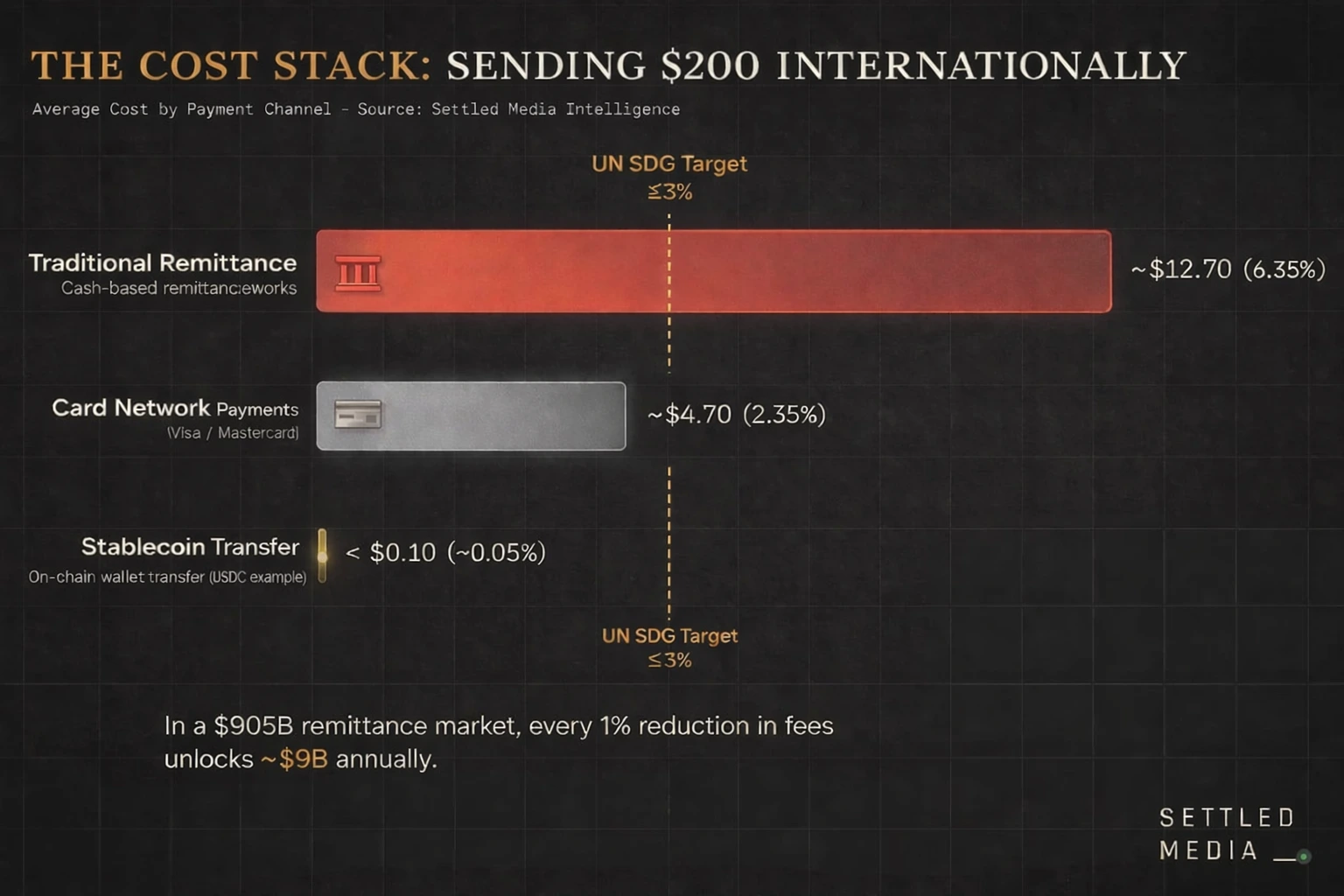
Look beyond the headline fee. Traditional services often charge low fees but apply unfavorable exchange rates. With USDC, you pay network gas fees (which are minimal on Layer 2s or Solana) and exchange spreads. For high-volume SMEs, the cumulative savings from avoiding FX markups often outweigh the technical complexity.
If capital velocity is critical, USDC offers a distinct advantage. Funds can settle in seconds or minutes, 24/7, compared to the 1-3 business days typical of bank transfers. This immediacy improves working capital cycles for businesses receiving payments from abroad.
Ensure your chosen provider adheres to local regulations. Circle’s USDC is issued by a regulated entity, and many remittance platforms now integrate USDC while maintaining full KYC/AML compliance. This reduces legal risk compared to using unregulated private ledgers or decentralized exchanges.
| Feature | Traditional MTO | USDC Remittance |
|---|---|---|
| Settlement Time | 1-3 business days | Seconds to minutes |
| Cost Structure | High fees + FX spread | Low network fee + minimal spread |
| Availability | Limited to business hours | 24/7/365 |
| Recipient Access | Cash pickup or bank deposit | Digital wallet or exchange withdrawal |



As an Amazon Associate, we may earn from qualifying purchases.
The right choice depends on your balance of convenience versus efficiency. For occasional, low-value transfers to family, traditional services remain the path of least resistance. For businesses or frequent senders prioritizing speed and cost, USDC infrastructure offers a clear competitive edge.
Watch out for weak options in cross-border settlement
Many providers market USDC remittance as a simple swap for traditional wire transfers, but the infrastructure reality is more complex. While Circle’s partnerships with firms like BCRemit demonstrate that blockchain can significantly reduce costs and settlement times, these benefits depend heavily on the specific corridors and integration depth. Providers often highlight theoretical efficiency without disclosing the friction points that remain for end-users or businesses.
When evaluating USDC for remittance, look beyond the headline savings. The actual experience depends on how well the provider handles fiat on-ramps and off-ramps. For instance, pairing virtual USD accounts with USDC transfers can help SMEs manage peso volatility and improve working capital access, as seen in Colombia-focused solutions. However, this requires robust local banking partnerships that not all platforms possess.
Be wary of claims that ignore regulatory compliance or liquidity risks. A true comparison must weigh the speed and cost of USDC against the reliability and regulatory safety of traditional rails. For high-stakes transfers, the "weak options" are those that prioritize speed over security or lack transparent fee structures. Always verify the provider’s ability to handle large volumes without slippage or delays.
The decision should hinge on your specific use case. If you need instant settlement for small, frequent transfers, USDC may offer a clear advantage. For larger, less frequent sums, the traditional banking system’s established dispute resolution and regulatory protections might still outweigh the marginal cost savings of crypto rails. Choose the infrastructure that aligns with your risk tolerance and volume needs, not just the lowest advertised fee.
Usdc remittance strategy: frequently asked: what to check next
Is USDC safe for sending money abroad? USDC is a regulated stablecoin backed by cash and short-term U.S. Treasuries, with monthly attestations from independent auditors. While the underlying asset is stable, users must still manage wallet security and ensure their chosen remittance provider operates within compliant jurisdictions.
How much faster is USDC compared to traditional banks? Traditional wire transfers often take 2–5 business days due to intermediary banking networks. USDC settlements occur on-chain in minutes, regardless of weekends or holidays. This speed allows recipients in regions like Colombia or Kenya to access funds immediately rather than waiting for clearing cycles.
Are there hidden fees when using USDC for remittances? The token itself carries no transaction cost, but your provider may charge network fees (gas) or conversion spreads. Compare the total landed cost against services like Western Union. Often, the combination of low gas fees and competitive FX rates makes USDC significantly cheaper for larger transfers.
Which blockchain networks are best for remittances? For cost efficiency, Layer 2 networks like Base or Arbitrum offer near-zero fees. For maximum liquidity and widespread exchange support, Ethereum mainnet or Solana are preferred. Choose the network your recipient’s on-ramp platform supports to avoid unnecessary conversion steps.
No comments yet. Be the first to share your thoughts!