Usdc remittance analysis limits to account for
When evaluating USDC for remittance, the primary constraint is not the token’s stability, but the friction of the rails. While USDC offers a transparent, 1:1 backed alternative to traditional fiat corridors, its real-world utility depends heavily on the infrastructure connecting sender to recipient. The analysis must separate the token’s inherent risk from the operational risks of the remittance providers that facilitate the swap.
The most significant constraint is the "last mile." USDC moves instantly on-chain, but converting it back to local currency in emerging markets often involves multiple intermediaries, liquidity gaps, and varying regulatory compliance requirements. Services like BCRemit have demonstrated that integrating USDC can reduce costs and increase speed compared to traditional methods, but this advantage is contingent on the specific local on-ramps and off-ramps available in the destination country. If the local exchange lacks deep liquidity, slippage can erode the savings gained from lower transfer fees.
Another critical constraint is regulatory fragmentation. While USDC is issued by Circle, a regulated financial institution, its acceptance varies by jurisdiction. Some countries restrict stablecoin usage entirely, while others impose strict KYC/AML requirements on remittance providers. This means that a solution working seamlessly in one corridor may be blocked or heavily scrutinized in another. The analysis must account for these jurisdictional barriers, as they dictate which remittance services can actually offer USDC-based transfers to a given beneficiary.
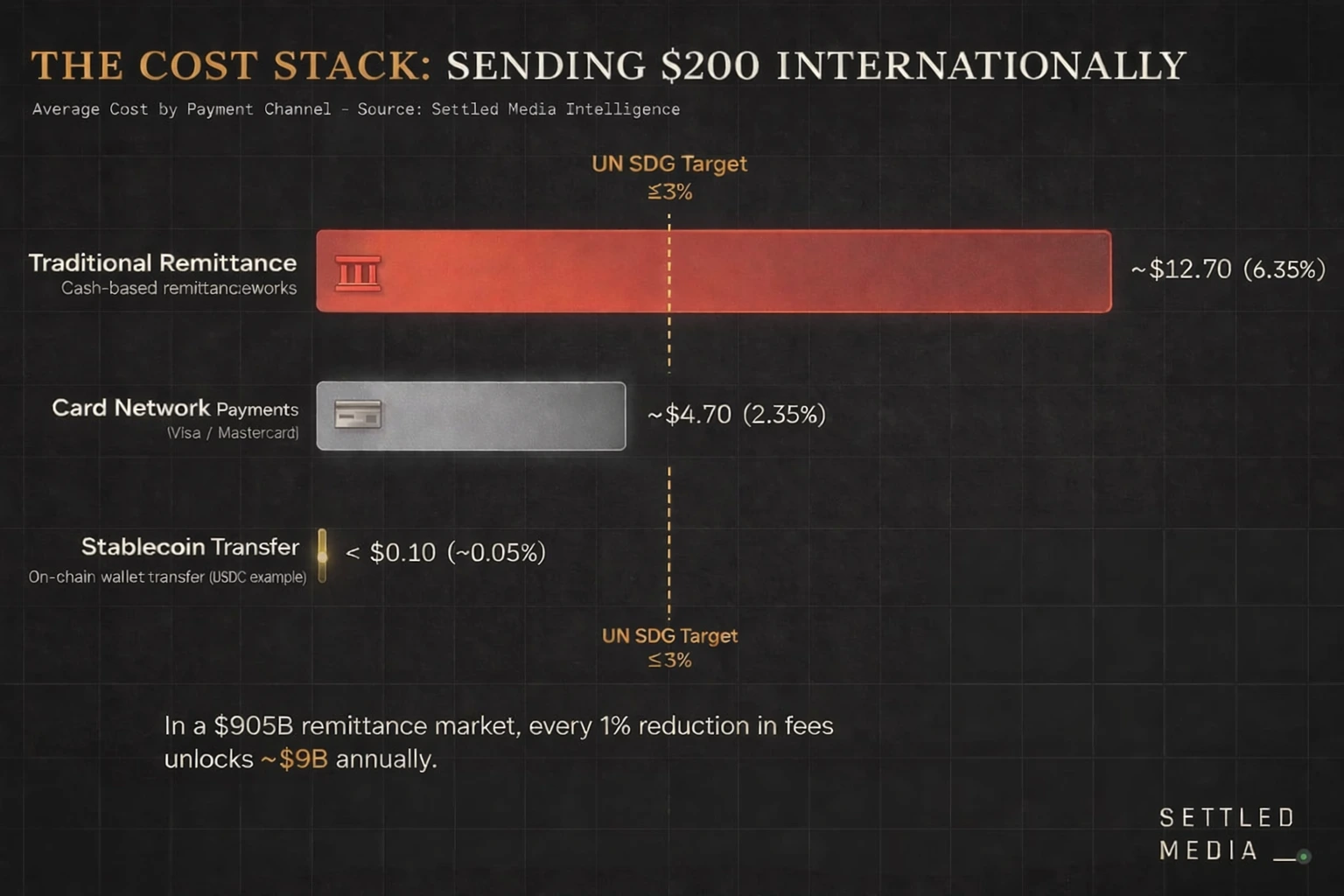
Finally, the cost structure is not always lower. While blockchain transaction fees (gas) are generally low, the spread charged by the remittance service provider to convert USDC to fiat can be substantial. A thorough analysis requires comparing the total landed cost—transfer fee plus conversion spread—against traditional providers like Western Union or Wise. In many cases, USDC wins on speed, but not always on final cost, depending on the volume and the specific corridor. The value proposition is thus nuanced: USDC offers speed and transparency, but the economic benefit is only realized when the local infrastructure is efficient and competitive.
Usdc remittance analysis choices that change the plan
When evaluating USDC for cross-border payments, you are comparing the speed and cost advantages of blockchain infrastructure against the regulatory and liquidity realities of traditional banking. The choice is rarely binary; it depends on which friction point matters most to your specific transfer volume and destination.
USDC operates on a hybrid model. It offers near-instant settlement on public blockchains like Solana or Ethereum, bypassing the multi-day delays of SWIFT. However, this speed comes with the responsibility of managing on-chain gas fees and ensuring the receiving end has a compatible wallet or exchange. Traditional methods offer familiarity and established legal recourse but often hide costs in poor exchange rates and slow processing times.
To make a clear decision, you need to look beyond the headline transaction fee and examine the total cost of ownership. This includes conversion spreads, network congestion during peak hours, and the regulatory compliance burden in your jurisdiction. The table below breaks down these concrete factors to help you weigh the tradeoffs.
| Factor | USDC | Traditional Bank | Hybrid Service |
|---|---|---|---|
| Speed | Seconds to minutes | 1-5 business days | 1-3 days |
| Cost Structure | Low network fee + spread | High fixed fee + hidden FX spread | Moderate fee + competitive FX |
| Accessibility | Requires crypto wallet | Universal bank account | App-based, bank-linked |
| Regulatory Risk | Medium (regulatory scrutiny) | Low (established oversight) | Medium (partner banks) |
The market behavior of USDC also influences remittance strategy. Because it is pegged to the US dollar, its value remains stable relative to USD, but it still fluctuates against local currencies in the receiving country. This means your remittance amount’s real-world value depends on the local exchange rate at the moment of conversion. Tracking USDC’s performance against major fiat pairs can help you time transfers for better rates.
Ultimately, the tradeoff is between control and convenience. USDC gives you direct control over the transaction path and lower fees, but requires more technical literacy. Traditional banks offer a hands-off experience with higher costs. Hybrid services attempt to bridge this gap, offering app-based interfaces that mask the underlying blockchain complexity while still leveraging faster settlement rails.
Choose the next step
USDC Remittance Analysis works best as a clear sequence: define the constraint, compare the realistic options, test the tradeoff, and choose the path with the fewest hidden costs. That order keeps the advice usable instead of decorative. After each step, pause long enough to check whether the recommendation still fits the reader's actual situation. If it depends on perfect timing, unusual access, or a best-case budget, include a simpler fallback.

Weak Options and Common Mistakes
Even with Circle’s infrastructure upgrades, many remittance providers still rely on outdated models that erode value. A common mistake is assuming all USDC integrations are equal. Some services use USDC only as a settlement layer but still charge fiat conversion fees at both ends, negating the speed advantage. Others lack transparent fee structures, hiding costs in poor exchange rates rather than upfront charges.
Another misleading claim is that “crypto remittance is always cheaper.” While USDC transactions can be significantly less expensive than Western Union or MoneyGram for large transfers, small amounts may still incur disproportionate fixed fees on some platforms. Always compare total cost, not just the headline fee. Additionally, not all providers offer real-time tracking or customer support in case of errors—critical for high-stakes transfers.
Be wary of platforms that do not clearly disclose their reserve backing or regulatory compliance. USDC’s strength lies in its transparency and full reserve backing by Circle, but third-party integrators may introduce counterparty risk. Stick to providers that explicitly reference Circle’s official documentation and maintain clear audit trails.
Usdc remittance analysis: frequently asked: what to check next
The following answers address the most common concerns regarding USDC stability, risk, and future utility in cross-border payments.
Helpful gear
Use these product recommendations as a starting point, then choose the size, material, and price point that fit how you actually use the gear.

As an Amazon Associate, we may earn from qualifying purchases.
No comments yet. Be the first to share your thoughts!