Why USDC reshapes remittance economics
Traditional banking rails for cross-border payments are notoriously slow and expensive. Sending money internationally often involves a chain of correspondent banks, each taking a cut and adding days to the settlement time. USDC changes this dynamic by moving value on public blockchains, which operate continuously and settle transactions in minutes rather than days.
The cost reduction is the primary driver for adoption. Legacy wire transfers can charge flat fees of $20 to $50, plus unfavorable foreign exchange spreads. In contrast, sending USDC typically costs a fraction of that amount, often just a few cents in network gas fees, regardless of the transfer size. This efficiency is particularly impactful for migrant workers sending smaller, frequent remittances to families abroad, where traditional fees can eat up 10% or more of the sent amount.
This economic advantage is not theoretical. Platforms facilitating USDC remittances in regions like Colombia have demonstrated the ability to cut transfer costs by up to 50% compared to traditional money transfer operators. By removing the need for pre-funded nostro accounts and reducing reliance on intermediaries, USDC allows for a more direct and transparent flow of value.
The stability of USDC further supports its role in remittances. As a stablecoin pegged to the US dollar, it eliminates the currency volatility risk associated with sending cryptocurrencies like Bitcoin. USDC maintains its $1.00 value by holding reserves in cash and short-dated U.S. Treasuries, ensuring that the value sent is the value received. This combination of low cost, speed, and price stability makes USDC a compelling alternative to the legacy banking system for cross-border payments.
Comparing USDC to traditional money transfers
When moving money across borders, the difference between traditional rails and stablecoin infrastructure comes down to two things: time and friction. Traditional providers like Western Union or SWIFT rely on a chain of correspondent banks, each taking a cut and adding processing delays. USDC-based platforms bypass most of this middleman layer, allowing value to move directly between sender and receiver.
The cost disparity is significant. Traditional remittance services often charge between 5% and 10% in total fees, including hidden exchange rate markups. In contrast, USDC transfers typically cost less than 1% in network gas fees, with many platforms absorbing these costs for the user. While traditional transfers can take 3-5 business days to settle, USDC transactions confirm in minutes, 24/7.
To visualize the gap, here is a direct comparison of the metrics that matter most for cross-border payments.
| Metric | USDC Transfer | Traditional (Western Union/SWIFT) |
|---|---|---|
| Average Fee | < 1% | 5% - 10% |
| Settlement Time | Minutes | 1 - 5 Business Days |
| Availability | 24/7/365 | Weekdays Only |
| Transparency | Fixed network fee | Hidden FX markups |
The data shows that USDC isn't just a faster alternative; it is a fundamentally different cost structure. For businesses or individuals sending regular remittances, these savings compound quickly. However, accessibility remains a hurdle. While traditional money transfer agents are physically present in thousands of locations, USDC adoption still requires digital literacy and access to a compatible wallet or exchange.
If you are looking to set up a secure environment for managing these digital assets, having the right tools is essential. The following hardware wallets and security accessories are commonly used by finance professionals to safeguard their holdings.


As an Amazon Associate, we may earn from qualifying purchases.
Infrastructure choices for remittance providers
Building a USDC remittance strategy requires more than just a wallet address. You need a robust stack of on/off-ramps, liquidity pools, and compliance tools that can handle high-volume, low-margin transactions. The goal is to replicate the speed of digital payments while maintaining the trust and regulatory adherence of traditional banking.
On-ramps and off-ramps
The entry and exit points are where most friction occurs. You need partners that can convert fiat to USDC and back with minimal slippage. Circle provides the foundational infrastructure for this, ensuring that USDC remains fully backed by cash and short-dated U.S. Treasuries. For providers like BCRemit, integrating directly with Circle’s infrastructure has been key to offering faster and cheaper transfers than legacy banking rails.
When selecting an on/off-ramp provider, look for those with deep liquidity in your target corridors. High liquidity ensures that large transfers don’t spike the price, keeping costs predictable for both you and your end-users. Avoid providers that rely on fragmented liquidity sources, as this can lead to delays and unexpected fees during peak hours.
Liquidity and settlement
Liquidity is the lifeblood of any remittance operation. With stablecoins, the core operational promise is near-instant, always-on cross-border settlement without the need for pre-funded local accounts in every country. This eliminates the capital tie-up associated with traditional correspondent banking.
However, you must manage this liquidity carefully. If your users are sending money from the US to Mexico, you need USDC available in Mexico to pay out in local fiat or stablecoins. This often requires partnering with local liquidity providers or using decentralized finance (DeFi) protocols that offer deep pools. The key is to minimize the time USDC sits idle, maximizing its velocity and reducing your overall cost of capital.
Compliance and security
Compliance isn’t an afterthought; it’s a core component of your infrastructure. Fireblocks and similar platforms offer institutional-grade security and compliance tools designed specifically for digital asset movements. These tools help you manage keys, enforce transaction limits, and monitor for suspicious activity in real-time.
Regulatory scrutiny is increasing globally. You need a tech stack that can integrate with compliance providers to screen transactions against sanctions lists and monitor for money laundering patterns. Choosing a partner that offers built-in compliance features can save you significant development time and reduce the risk of regulatory penalties.
Real-world case studies in Latin America
Theoretical savings often look very different when applied to the high-volume corridors of Latin America. By examining how platforms like BCRemit and MuralPay have integrated USDC, we can see concrete evidence of cost reduction and speed improvements that traditional banking rails struggle to match.
BCRemit serves as a prime example of infrastructure optimization. By integrating Circle’s USDC, the platform has replaced multi-layered correspondent banking networks with direct blockchain settlement. This shift has redefined the user experience, making transfers faster and significantly cheaper. The result is a model that is more accessible for users who previously faced prohibitive fees and long wait times for cross-border payments.
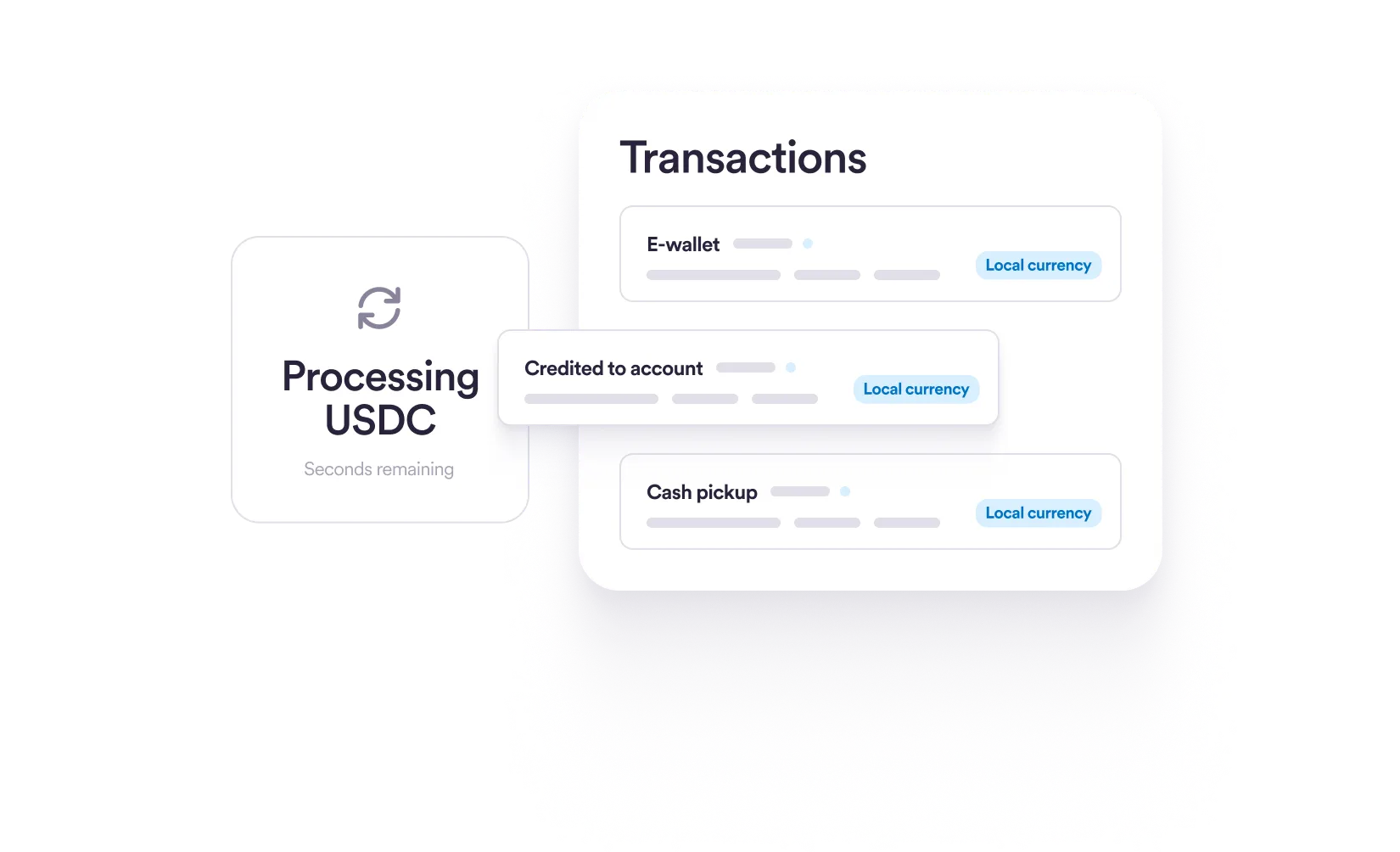
In the Colombia corridor, the data supports a similar trajectory. Platforms leveraging USDC for remittances have demonstrated the ability to cut transfer costs by up to 50% compared to traditional money transfer services. This isn't just a marginal improvement; it represents a structural shift in how value moves across borders, delivering funds almost instantly rather than over several business days.
These examples validate the strategy for finance professionals looking to lower cross-border costs. The combination of lower fees and real-time settlement makes USDC a viable alternative to legacy systems, particularly in regions with high remittance volumes and expensive traditional banking infrastructure.
Navigating regulatory and safety requirements
When moving money across borders, trust is the only currency that matters. USDC addresses this by maintaining a 1:1 peg with the U.S. dollar, backed entirely by cash and short-dated U.S. Treasuries held in regulated financial institutions. This structure provides a level of transparency and stability that traditional correspondent banking often lacks, effectively neutralizing the counterparty risk that plagues many legacy remittance channels.
The infrastructure supporting these transactions is equally rigorous. Partnerships with industry leaders like Mastercard and Fireblocks ensure that the rails are secure and compliant with evolving global standards. For providers, this means reduced friction in meeting anti-money laundering (AML) and know-your-customer (KYC) requirements, allowing them to scale cross-border services without the heavy regulatory overhead of traditional banking corridors.
While no system is immune to risk, the combination of fully reserved assets and institutional-grade security protocols makes USDC a lower-risk vehicle for high-value transfers. By removing the ambiguity around reserve backing, users can move funds with the confidence that their capital is protected by the same safeguards that secure the broader U.S. financial system.
Frequently asked questions about USDC remittances
How does USDC stay pegged to the dollar?
USDC maintains its $1 parity by holding fiat currency reserves equal to the total circulating supply. These reserves are held in regulated U.S. financial institutions and consist of cash and short-dated U.S. Treasuries. While minor fluctuations can occur during high volatility, the 1:1 backing mechanism ensures the asset remains stable for cross-border transfers.
Is USDC 100% safe?
USDC is considered one of the most transparent stablecoins because its reserves are fully backed by high-quality assets. Circle publishes monthly attestation reports to verify that every token is supported by equivalent cash and treasury holdings. This regulatory compliance provides a layer of security that traditional opaque banking channels often lack.
What is the advantage of using USDC over traditional banking?
Traditional wire transfers rely on a chain of correspondent banks, which adds fees and delays. USDC enables real-time, borderless value exchange that operates 24/7. By removing intermediaries, senders avoid the markup on foreign exchange rates and the flat fees associated with SWIFT networks, resulting in significantly lower total costs for the recipient.
No comments yet. Be the first to share your thoughts!