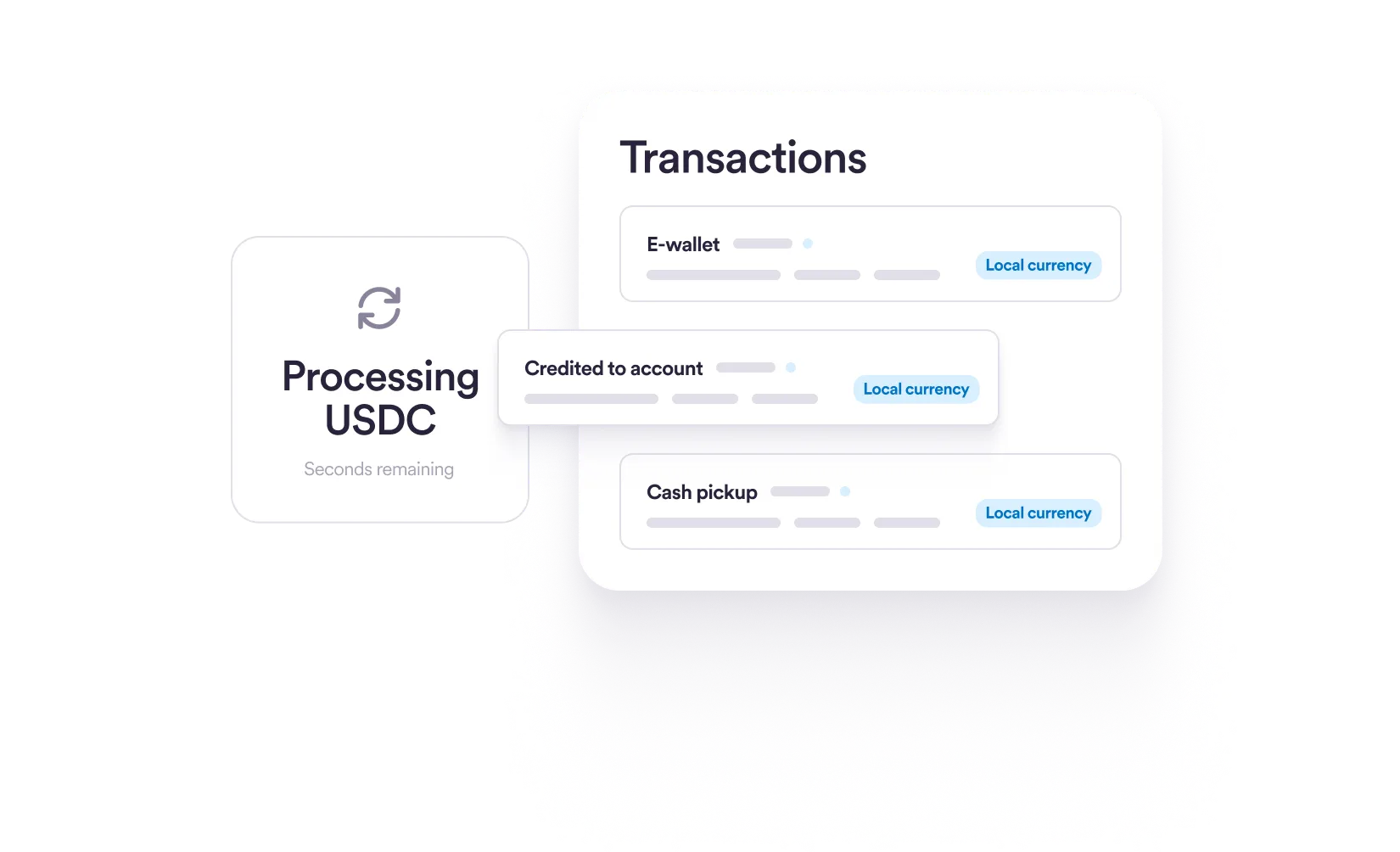
Why USDC changes remittance economics
Traditional cross-border payments often feel like a tax on distance. You send money, and by the time it arrives, a significant chunk has vanished into intermediary fees, correspondent bank charges, and unfavorable exchange rate spreads. USDC changes this dynamic by offering a digital dollar that moves with the speed of the internet, not the sluggish pace of the SWIFT network.
The most immediate benefit is cost reduction. Industry data suggests that senders can cut fees by up to 50% compared to traditional money transfer operators when using stablecoins for routes like Colombia. This isn't just about lower transaction fees; it's about eliminating the hidden costs of slow settlement times, where funds sit in limbo for days, incurring no value while trapped in transit.
Speed is the second pillar of this economic shift. While a traditional wire transfer might take three to five business days to clear, USDC transactions settle in minutes, regardless of holidays or weekends. This immediacy provides liquidity that traditional rails simply cannot match, allowing recipients to access funds when they need them most.
To understand the current value proposition, it helps to see USDC in action. The following widget verifies the live peg of USDC to the US dollar, confirming the stability that makes it a reliable medium for remittances.
How USDC Remittance Costs Compare to Traditional Providers
Traditional remittance providers like Western Union and MoneyGram charge significant fees that eat into the value of your transfer. Industry averages suggest senders may cut fees by up to 50% when switching to USDC-based transfers, especially for corridors like those to Colombia. While legacy providers often charge a percentage of the transfer amount plus fixed fees, USDC transactions typically involve only the small network gas fee and the exchange spread.
Speed is another major differentiator. Traditional wire transfers and cash pickup services can take one to five business days to settle, depending on the banks involved and the countries in question. USDC transfers, by contrast, settle on-chain in minutes, regardless of holidays or banking hours. This immediacy allows recipients to access funds much faster, reducing the financial strain of waiting for support.
To visualize the difference, consider the following comparison of typical remittance metrics. These figures represent general market averages and can vary based on specific routes, amounts, and service providers.
| Provider | Avg. Fee | Settlement Time | Accessibility |
|---|---|---|---|
| USDC (via partners) | 1-2% + gas | Minutes | 24/7 digital wallet |
| Western Union | 5-10% + fixed | 1-5 days | Agents + digital |
| MoneyGram | 5-10% + fixed | 1-5 days | Agents + digital |
| Bank Wire (SWIFT) | 15-30 USD + % | 2-5 days | Bank account required |
The economic advantage becomes clearer when you factor in the hidden costs of traditional transfers, such as poor exchange rates and intermediary bank fees. USDC provides a more transparent pricing structure, allowing senders to know exactly what they are paying. This transparency, combined with the speed of settlement, makes USDC a compelling alternative for high-stakes financial decisions where time and cost matter.
Infrastructure requirements for compliant settlement
Building a USDC remittance strategy requires more than just a blockchain wallet; it demands a regulated infrastructure stack that mirrors traditional banking security while leveraging digital speed. The process begins with a compliant on-ramp, where fiat currency is converted into USDC. According to Stripe, this initial conversion allows the sender to transmit value directly over a blockchain network, bypassing the slow, fragmented correspondent banking networks that typically delay international transfers. The recipient then converts the stablecoin back into local currency through an off-ramp, completing the settlement cycle.
The backbone of this operation is custody. For high-stakes financial decisions, holding funds in a personal wallet is insufficient due to security and liability risks. Instead, remittance providers rely on regulated custodians like Fireblocks, which offer multi-party computation (MPC) and institutional-grade security protocols. These solutions ensure that private keys are never exposed in a single location, reducing the risk of theft or loss. With over 2,400 organizations choosing such infrastructure, the industry standard has shifted toward institutional custody to maintain trust and regulatory compliance.
Compliance is equally critical. Every transaction must pass through robust Know Your Customer (KYC) and Anti-Money Laundering (AML) checks. Regulated custodians and payment processors integrate these checks seamlessly into the user journey, ensuring that the remittance flow adheres to local and international regulations. This compliance layer is what distinguishes a viable business strategy from a risky experiment.
To monitor the underlying asset's performance and liquidity during these transactions, you can track USDC's market behavior. While USDC is pegged to the USD, understanding its market dynamics helps in managing treasury reserves and optimizing exchange rates.
Real-world adoption and case study evidence
USDC remittance is no longer a theoretical exercise; it is an active operational strategy for major financial infrastructure providers. By integrating Circle’s USDC, companies like BCRemit have successfully redefined cross-border flows, delivering experiences that are significantly faster and cheaper than traditional banking rails. This shift demonstrates that stablecoins can solve the friction of international settlement in real-time.
BCRemit’s implementation serves as a primary example of this efficiency. By leveraging USDC, the platform has cut remittance fees down to approximately 1%, a stark contrast to the 5-10% often charged by conventional money transfer operators. This reduction is not abstract; it directly impacts the purchasing power of migrant workers sending funds home. The transaction speed has also improved dramatically, moving from days to minutes, proving that stablecoin infrastructure can handle high-volume, low-margin financial flows reliably.
The credibility of this adoption is reinforced by partnerships with established financial entities. BCRemit’s integration with Circle is backed by the same infrastructure that powers major payment networks, ensuring regulatory compliance and liquidity depth. For financial decision-makers, this evidence confirms that USDC is a viable, scalable solution for optimizing cross-border payments, offering concrete data points on cost and speed that legacy systems struggle to match.
Frequently asked questions about USDC remittances
What is stablecoin remittance?
Stablecoin remittance moves value across borders by converting local currency into a digital asset like USDC. The sender transmits the token over a blockchain network, where it typically settles within minutes. The recipient then converts the USDC back into local currency, bypassing traditional banking rails to reduce settlement friction Source: IADB.
What are the payment methods for USDC?
You can acquire USDC using a debit card, credit card, bank transfer, Apple Pay, Google Pay, PayPal, or regional payment methods. These funds go directly into a digital wallet you control, rather than being held by a third-party exchange account. This direct-to-wallet model ensures you maintain full custody of your assets from the moment of purchase Source: MetaMask.
How does USDC compare to traditional wire transfers?
USDC offers significantly faster settlement times than traditional wire transfers, which can take several days to clear. While fees vary by provider and network congestion, USDC transactions often cost less than the combined sending and receiving fees of international wires. However, traditional banks still offer established consumer protections and regulatory recourse that crypto wallets do not inherently provide.
Helpful gear
Use these product recommendations as a starting point, then choose the size, material, and price point that fit how you actually use the gear.

As an Amazon Associate, we may earn from qualifying purchases.
No comments yet. Be the first to share your thoughts!