Why USDC reshapes cross-border settlement
The traditional remittance corridor is plagued by latency and opacity. Funds moving through correspondent banking networks often take two to five business days to settle, during which time capital is tied up and exchange rate risk persists. USDC changes this dynamic by offering a settlement layer that operates 24/7/365, reducing finality from days to minutes. For legal and compliance teams, this speed is not just an efficiency gain; it is a risk mitigation tool that limits the window for fraud and regulatory exposure.
At its core, USDC is a fiat-backed stablecoin, meaning every token is redeemable 1:1 for US dollars held in regulated financial institutions. According to Coinbase, these reserves consist of cash and short-dated U.S. Treasuries, with transparent monthly attestations ensuring backing integrity. This structure provides the price stability required for B2B payments and cross-border settlements, where volatility is unacceptable. Unlike volatile cryptocurrencies, USDC functions as a digital dollar, allowing businesses to transact globally without hedging against market swings.
The efficiency gains are substantial. As noted by The Payments Association, USDC provides a compliant means for low-cost, real-time payments that bypass the fragmented correspondent banking infrastructure. Platforms like Stripe now facilitate USDC transfers for businesses, enabling faster capital turnover and reduced foreign exchange fees. This shift moves remittance from a slow, opaque process to a transparent, programmable flow.
To understand the market context, it is helpful to view USDC/USD as a stable asset class. While the price remains pegged to the dollar, the volume and liquidity of this pair indicate the depth of institutional adoption and the robustness of the underlying settlement network.
This stability, combined with the speed of blockchain settlement, positions USDC as a critical infrastructure component for modern cross-border finance. It allows companies to settle obligations instantly, improving cash flow predictability and reducing the operational friction inherent in legacy banking systems.
USDC vs. Traditional Money Transfer
The choice between USDC infrastructure and legacy providers like Western Union or traditional bank wires often comes down to a trade-off between speed and friction. For remitters moving funds across borders, the difference is not just about convenience; it is a fundamental shift in how capital moves and how risk is managed.
Legacy systems operate on a batch-processing model that can take days to settle. During that window, funds are exposed to currency fluctuation and operational delays. USDC, by contrast, settles on-chain in minutes. This near-instantaneous finality reduces exposure to volatility, a critical factor for SMEs managing working capital or individuals sending essential support to family members abroad.
The cost structure also diverges sharply. Traditional wires often involve fixed fees plus significant foreign exchange (FX) spreads that can exceed 3-5%. USDC transaction costs are generally limited to network gas fees, which remain low even for larger transfers, and the FX spread is typically much tighter when converted through regulated on-ramps.
The following table compares the key operational metrics. Note that while USDC offers speed and lower base fees, it requires the recipient to have access to a digital wallet or exchange to convert the funds, adding a layer of technical friction that traditional bank accounts do not.
| Feature | USDC Rail | Traditional Wire | Legacy Transfer (e.g., WU) |
|---|---|---|---|
| Settlement Time | 1-5 minutes | 1-3 business days | Minutes to hours |
| Average Fee | $0.01 - $0.50 | $15 - $30 | $4 - $12 |
| FX Spread | 0.1% - 0.5% | 1% - 3% | 3% - 5% |
| Accessibility | Requires crypto wallet/exchange | Bank account required | Physical agent or bank |
| Transparency | Real-time on-chain tracking | Delayed status updates | Limited tracking |
The data suggests that for high-volume or urgent transfers, USDC provides a clear advantage in cost and speed. However, the "traditional wire" remains the default for many due to its ubiquity and regulatory familiarity. The decision ultimately hinges on whether the recipient can plan around the digital onboarding required for crypto rails.
For those looking to streamline their own financial operations or understand the tools behind these transfers, the following resources may be helpful.
Operational models for stablecoin remittances
Stablecoin remittance infrastructure generally falls into two distinct categories: closed-loop fiat models and open-loop crypto models. The choice between these models dictates everything from regulatory exposure to transaction speed and final cost.
Closed-loop fiat model
In a closed-loop system, both the sender and the recipient operate entirely within the fiat economy. The remittance provider acts as an intermediary, converting the sender’s local currency into a stablecoin like USDC for the transfer leg, then immediately converting it back to fiat for the recipient’s withdrawal.
This model is often preferred by traditional remittance companies and banks because it minimizes friction for end-users who do not hold cryptocurrency wallets. The provider absorbs the crypto volatility risk and manages the on-ramp and off-ramp liquidity. While this simplifies the user experience, it introduces operational complexity for the provider, which must maintain robust banking partnerships and ensure compliance with anti-money laundering (AML) standards at both ends of the chain.
Open-loop crypto model
The open-loop model removes the fiat intermediary step for the recipient. The sender converts local currency into USDC, and the recipient receives the stablecoin directly into a digital wallet. The recipient then decides when and how to convert those assets back into local currency, either through a peer-to-peer exchange or a dedicated liquidity provider.
This approach offers greater speed and potentially lower costs by eliminating the second conversion step and reducing reliance on traditional banking rails for the final payout. However, it requires the recipient to have access to crypto infrastructure. This model is particularly effective in regions with unstable local currencies or limited banking access, where holding USDC itself serves as a hedge against inflation.
Choosing the right infrastructure
The decision hinges on your target demographic and regulatory environment. Closed-loop models offer broader accessibility but higher operational overhead. Open-loop models provide efficiency and speed but require a more crypto-savvy user base. As the USDC market evolves, many providers are adopting hybrid approaches to balance these trade-offs.
Compliance and Regulatory Risk
Sending USDC isn't just a technical transaction; it is a legal one. Because USDC is a regulated stablecoin, it operates within a stricter framework than many other cryptocurrencies. For remittance businesses and individual senders, this means compliance is not optional—it is the foundation of the entire operation. Understanding these requirements is the only way to mitigate regulatory risk effectively.
KYC and AML Requirements
Unlike anonymous cryptocurrencies, USDC flows are tied to identifiable entities. This is by design. To prevent money laundering and terrorist financing, any legitimate USDC remittance service must enforce strict Know Your Customer (KYC) and Anti-Money Laundering (AML) protocols.
When you convert fiat currency into USDC, the exchange or wallet provider verifies your identity. They collect documentation such as government-issued IDs and proof of address. This data is shared with regulatory bodies when required. If you are a business sending funds internationally, you must also screen recipients against sanctions lists. Failure to do so can result in heavy fines or the suspension of your banking relationships. The system is built to leave a traceable audit trail.
Reserve Transparency and Attestations
Trust in USDC comes from its reserve structure. Every USDC token is backed 1:1 by cash and short-dated U.S. Treasuries held in regulated U.S. financial institutions. This is not a theoretical claim; it is verified monthly.
Circle, the issuer of USDC, publishes independent attestations from top-tier accounting firms. These reports confirm that the reserves exist and are sufficient to cover all circulating tokens. For remitters, this transparency is critical. It ensures that the USDC you send will hold its value and that the underlying assets are safe. Without this level of oversight, the regulatory risk would be far higher, and institutional adoption would stall.
The Cost of Compliance
Compliance has a cost. KYC checks and AML screening add time and expense to the remittance process. However, these costs are the price of entry for a stable, legal financial system. They protect users from fraud and ensure that USDC remains a viable tool for global payments. Ignoring these requirements doesn't save money; it creates liability.
Real-world adoption cases in emerging markets
Theoretical efficiency often crashes against the reality of local banking infrastructure. In markets like Colombia and Malawi, USDC adoption is driven less by speculation and more by the urgent need to bypass liquidity bottlenecks and exorbitant transfer fees. These cases highlight how stablecoins solve specific, high-stakes operational problems for businesses and individuals alike.
Colombia: Faster working capital for SMEs
Colombian small and medium enterprises (SMEs) face significant friction when receiving international payments. Traditional wire transfers can take days to clear, tying up working capital and exposing businesses to exchange rate volatility between the transaction and settlement. By pairing virtual USD accounts with near-instant USDC on-chain transfers, companies like MuralPay have streamlined this process.
This approach allows businesses to receive funds in minutes rather than days. The speed reduces exposure to peso volatility and accelerates access to capital, providing a tangible advantage over legacy money transfer corridors. The shift is not just about speed; it is about financial predictability for businesses operating in high-inflation environments.
Malawi: Reducing remittance costs
For Malawi, remittances sent from the diaspora are a critical source of foreign exchange and household income. However, traditional channels often charge fees that eat into these vital funds, particularly for smaller transfers. Onafriq’s partnership with Circle aims to simplify these cross-border payments by leveraging USDC.
By integrating USDC, Onafriq can offer a more cost-effective alternative to traditional money transfer operators. The goal is to ensure that more of the sender’s money reaches the recipient in local currency, reducing the friction and cost associated with moving money across borders. This model demonstrates how stablecoins can support financial inclusion in regions with limited banking access.
Frequently asked: what to check next
How does stablecoin remittance work?
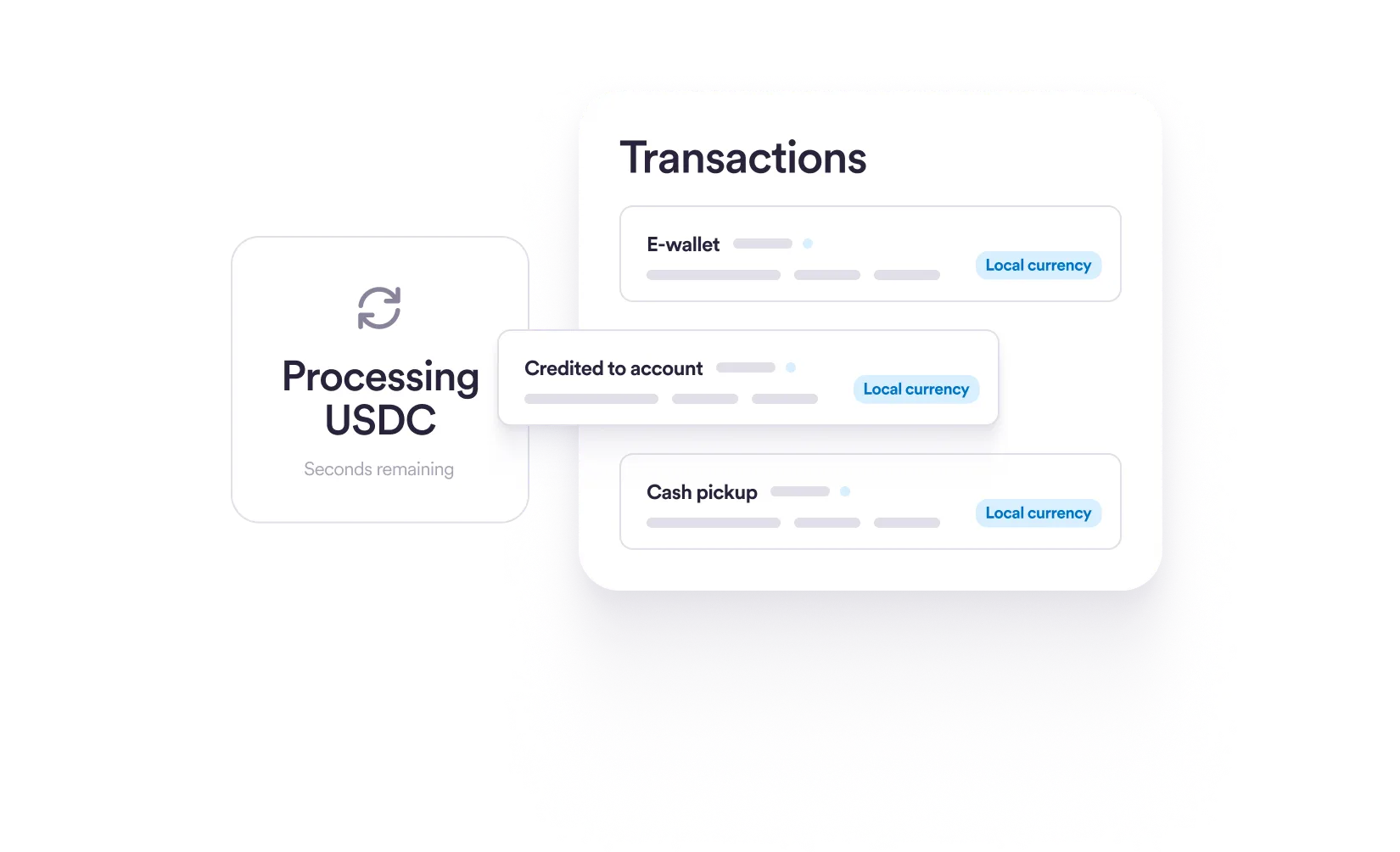
In a typical stablecoin remittance flow, the sender converts local currency to a stablecoin and transmits it across a blockchain network within minutes. The recipient then converts it back into local currency. This mechanism bypasses traditional correspondent banking networks, reducing both time and cost for cross-border payments.
How is USDC backed by USD?
Known as a fiat-backed stablecoin, USDC is backed by high-quality reserves and with transparent, monthly attestation's. Every USDC is 100% backed by cash and short-dated U.S. Treasuries held in regulated U.S. financial institutions. This structure ensures that USDC maintains its peg to the U.S. dollar.
Is USDC compliant for cross-border payments?
Yes, USDC provides an innovative and compliant means for low-cost, real-time, and borderless payments. It is designed to meet regulatory standards, making it suitable for businesses and individuals seeking a secure and efficient remittance solution.
Helpful gear
Use these product recommendations as a starting point, then choose the size, material, and price point that fit how you actually use the gear.

As an Amazon Associate, we may earn from qualifying purchases.
No comments yet. Be the first to share your thoughts!