Usdc remittance strategy limits to account for
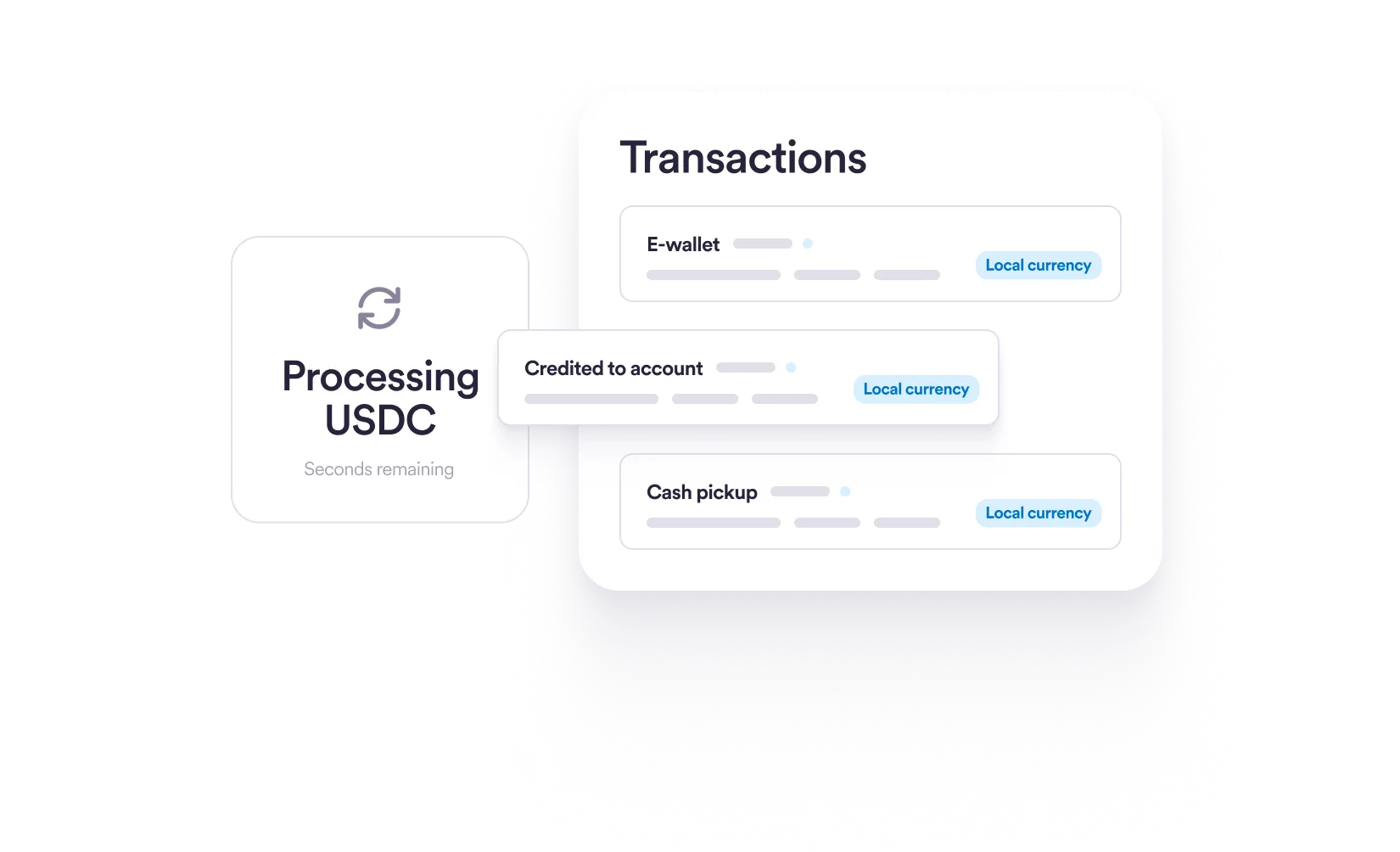
Stablecoin remittance works by converting local currency to a digital token, sending it across a blockchain network, and converting it back to local currency at the destination. This flow typically settles in minutes, bypassing the multi-day delays of traditional banking rails. However, an effective USDC remittance strategy requires navigating regulatory landscapes and exchange rate frictions that can erode savings.
The primary advantage lies in cost and speed. Industry data suggests senders may cut fees by up to 50% compared with traditional money transfer services, particularly for corridors like Colombia. Providers like BCRemit leverage Circle's USDC infrastructure to make these transfers more accessible, though success depends on the reliability of local on-ramps and off-ramps.
How USDC maintains its peg
USDC stays pegged to the dollar because it is backed by the equivalent value of US dollar-denominated assets held in segregated accounts. These reserves include cash and short-dated US Treasury bills, ensuring that every USDC token is redeemable one-to-one for USD. This structure provides transparency and stability, which is critical for remittance recipients who need predictable value upon conversion.
Tradeoffs by use case
While USDC offers speed, it is not universally superior. Traditional wire transfers remain necessary for large, compliance-heavy institutional settlements. For individual remitters, USDC shines in corridors with high traditional fees and poor banking infrastructure. The decision hinges on the recipient's ability to easily convert USDC into local fiat without significant slippage or additional platform fees.
Decision guide
Choose USDC if your priority is speed and lower fees for personal transfers, and if the recipient has access to a reliable local exchange. Stick to traditional wires for large, regulated institutional payments or where the recipient lacks digital currency access. Always calculate the total landed cost, including the spread between the buy and sell price of USDC, before committing to a strategy.
Tradeoffs in a USDC Remittance Strategy
Choosing USDC for cross-border settlements requires balancing speed and cost against regulatory complexity and liquidity depth. While the infrastructure is mature, the actual experience depends heavily on the corridors involved and the on-ramp or off-ramp partners you select.
Speed and Finality
USDC transactions typically settle in minutes, regardless of the time of day. This contrasts sharply with traditional wire transfers, which often take one to three business days due to intermediary banking networks. For time-sensitive payments, such as emergency family support or urgent vendor payments, this speed advantage is the primary driver for adoption.
Cost Structure
The cost advantage is most visible in corridors with high traditional fees, such as remittances to Latin America or Southeast Asia. Industry data suggests senders can cut fees by up to 50% compared to traditional money transfer operators by using USDC. However, you must account for network gas fees and the spread charged by the exchange or payment processor converting fiat to USDC and back.
Regulatory and Compliance Friction
Traditional banks have established compliance frameworks, but USDC introduces new variables. You must ensure your payment partner is fully regulated and holds the necessary licenses in both the sending and receiving jurisdictions. The risk of frozen funds or account closures is higher with crypto-native platforms if they lack robust KYC/AML procedures. Always verify that the platform operates within the legal boundaries of your specific region.
Liquidity and Conversion Risk
While USDC is pegged to the dollar, the conversion back to local fiat can introduce slippage. In markets with thin liquidity for USDC pairs, the exchange rate offered by the off-ramp may be less favorable than the mid-market rate. This is a critical tradeoff: you save on transfer fees but may lose value during the final conversion step if the local market is not deep enough.
| Factor | USDC Strategy | Traditional Wire | Primary Risk |
|---|---|---|---|
| Settlement Time | Minutes | 1-3 Business Days | Network congestion |
| Average Fee | Low (0.5-2%) | High (3-7%) | Exchange spreads |
| Regulatory Clarity | Evolving | Established | Compliance changes |
| Liquidity Depth | Variable by Corridor | High | Conversion slippage |
Decision Framework
For high-volume B2B payments or urgent B2C transfers to emerging markets, USDC offers a clear efficiency gain. For low-volume, high-trust transactions within developed economies with strong banking infrastructure, the traditional wire may still suffice due to its simplicity and lack of technical overhead. Evaluate your specific corridor’s liquidity and regulatory environment before committing to a stablecoin strategy.
Build your USDC remittance framework
Stablecoin remittances work by converting local currency into a digital token, transmitting it across a blockchain network, and converting it back to local currency at the destination. This flow cuts settlement time from days to minutes. To execute this strategy effectively, you need to verify infrastructure, compare costs, and select the right channels for your specific use case.
Verify reserve transparency and compliance
Before integrating any stablecoin, confirm that reserves are fully backed by short-duration US dollars and cash equivalents. USDC maintains its peg through segregated accounts holding these assets, providing a level of auditability that traditional correspondent banking often lacks. Look for platforms that publish regular attestation reports. This transparency is non-negotiable for high-stakes cross-border settlements where regulatory scrutiny is high.
Calculate real-world fee structures
Traditional money transfer services often charge high flat fees plus unfavorable exchange rate margins. In contrast, USDC transactions typically incur only blockchain network fees (gas) and platform processing fees. For example, sending remittances to Colombia via USDC can reduce fees by up to 50% compared to traditional providers like Western Union. Always model the total cost of ownership, including the spread between the buy and sell rates on both ends of the transaction.
Select channels based on recipient access
Not all recipients have easy access to cryptocurrency wallets. Your choice of remittance partner should depend on the recipient's digital literacy and local banking infrastructure. Services like BCRemit integrate USDC to offer faster, cheaper transfers while handling the complexity of fiat on-ramps and off-ramps for the end user. If your recipients are unbanked or underbanked, prioritize platforms that provide cash pickup options or direct mobile wallet integration.
Compare providers using a decision matrix
| Feature | Traditional Transfer (e.g., Western Union) | USDC Remittance (e.g., BCRemit, MuralPay) |
|---|---|---|
| Settlement Time | 1-3 business days | Minutes to hours |
| Fee Structure | High flat fee + FX spread | Low network fee + small platform fee |
| Accessibility | High (cash pickup, retail agents) | Medium (requires digital wallet or partner app) |
| Transparency | Low (hidden FX margins) | High (on-chain auditability) |
Finalize your implementation strategy
Start with a pilot program targeting a single corridor where speed and cost are the primary pain points. Monitor transaction success rates and recipient feedback for two weeks. Once the workflow is stable, expand to other corridors. Keep a close eye on regulatory changes in both the sending and receiving jurisdictions, as stablecoin remittance policies evolve rapidly. This measured approach minimizes risk while capturing the efficiency gains of blockchain infrastructure.
Watch Out for Misleading Claims in USDC Remittances
The promise of instant, cheap cross-border settlements is real, but the market is crowded with weak options and misleading marketing. While USDC infrastructure has matured, many providers still obscure hidden costs or rely on outdated settlement rails that negate the speed benefits. To avoid common mistakes, you must look past the headline "zero fees" claims and examine the full conversion chain.
The Reality of "Zero Fee" Promises
Many remittance apps advertise zero transaction fees for USDC transfers, but this is often a marketing trap. The cost is usually buried in the exchange rate spread or hidden withdrawal fees. For example, while sending USDC might be free, converting local currency to USDC and then back to the recipient's local currency can incur significant spreads. Always compare the total received amount against traditional services like Western Union or Wise, not just the upfront fee. A provider like BCRemit, which leverages Circle's USDC infrastructure, demonstrates how true efficiency comes from transparency, not just low headline fees [[src-serp-1]].
Speed vs. Settlement Finality
Another common mistake is confusing transaction speed with settlement finality. While USDC transfers on chains like Solana or Ethereum Layer 2s are near-instant, the finality and regulatory compliance depend on the on-ramp and off-ramp providers. Some platforms claim "instant" remittances to countries like Colombia, but if the local banking partner has slow processing times, the recipient may still wait hours or days. Mural Pay's analysis highlights that while USDC cuts fees by up to 50% compared to traditional methods, the actual speed benefit depends heavily on the local financial infrastructure [[src-serp-2]].
Regulatory and Compliance Risks
Using USDC for remittances also introduces regulatory nuances. Unlike traditional money transmitters, stablecoin providers operate in a evolving legal landscape. Some jurisdictions may restrict the use of stablecoins for cross-border payments, or require specific licensing for on-ramp/off-ramp services. Ensure your provider is compliant with local regulations to avoid frozen funds or account closures. Always verify that the provider holds the necessary licenses in both the sending and receiving countries.
How to Verify the Best Option
To choose the right USDC remittance service, focus on three key metrics: total cost (including spreads), settlement time to the recipient's bank, and regulatory compliance. Avoid providers that do not clearly disclose their exchange rates or fees. Look for services that offer real-time tracking and transparent reporting. By doing your due diligence, you can avoid the weak options and take advantage of the genuine efficiency USDC offers.
Usdc remittance strategy: what to check next
Helpful gear
Use these product recommendations as a starting point, then choose the size, material, and price point that fit how you actually use the gear.


As an Amazon Associate, we may earn from qualifying purchases.
No comments yet. Be the first to share your thoughts!